
Champions belts
Championship Belt Strap Guide: Materials, Size, Closures & Replacement Tips
Sep
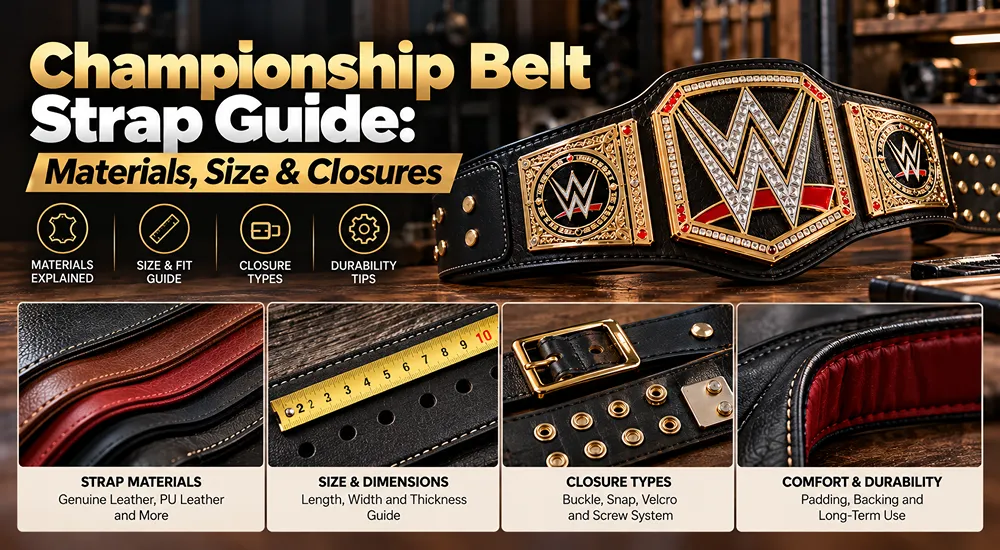
When people shop for a championship belt, most of the attention goes to the center plate. However, the strap is just as important to the belt’s overall fit, comfort, durability, and appearance.
A championship belt strap supports the metal plates, determines how the belt sits around the waist, and affects how easily it can be worn, transported, or displayed. Whether you are ordering a new custom title belt or replacing an older strap, understanding the main options can help you make a more practical choice.
What Is a Championship Belt Strap?
The championship belt strap is the section that connects the main plate, side plates, and fastening system into one wearable belt. It provides the structure behind the metal artwork and controls how the belt wraps around the wearer.
Championship belt straps can differ in material, thickness, color, length, edge finishing, tooling, and closure style. These details should match the way the belt will be used.
Leather vs. Synthetic Championship Belt Straps
Leather and synthetic materials are both used for championship belt straps. The right option depends on your priorities, budget, expected use, and preferred appearance.
Leather Straps
Genuine leather is commonly chosen for custom championship belts because it has a traditional appearance and a substantial feel. Leather straps can also be finished with tooling, embossing, stitching, or other decorative details.
For a belt that will be worn regularly, consider the leather’s thickness, flexibility, backing, and overall construction rather than looking only at the material name.
Synthetic Straps
Synthetic leather can provide a consistent appearance and may be used for some replica, award, or budget-focused belts. Its performance depends on the specific material and construction.
When comparing synthetic options, ask about the strap thickness, backing, fastening system, and intended use.
How to Choose the Right Championship Belt Strap Size
Strap length should be based on the actual waist range the belt needs to accommodate. Do not choose a size only by age, height, or the overall length of the belt.
Before ordering, measure the intended wearer’s waist and check how the closure system works. A belt that fits one person comfortably may not provide enough adjustment for a group award or recurring championship.
For leagues, tournaments, and traveling titles, tell the belt maker that the belt may be worn by different winners. A suitable adjustment range can make the championship belt easier to reuse.
Championship Belt Closures: Snaps, Buttons, and Fasteners
The closure connects the two ends of the strap and plays an important role in fit. Snap fasteners are common because they allow the wearer to adjust the belt using different fastening positions.
Button-style closures and other fastening systems may also be used depending on the belt design. The important consideration is whether the closure is secure, easy to operate, and compatible with the strap’s construction.
When ordering a replacement strap, check the existing closure before buying. A strap with a different fastening arrangement may require additional hardware or modification.
How Strap Color Changes the Look of a Belt
Black remains a classic choice because it works with many metal finishes. However, custom belts can use colors such as red, blue, white, green, or other shades to match a team, brand, event, or organization.
Think about the complete belt rather than choosing the strap color separately. The strap should complement the center plate, side plates, lettering, and other design elements.
A strong color combination can make a championship belt easier to recognize in event photographs while reinforcing the identity of the competition or organization.
When Should You Replace a Championship Belt Strap?
A strap may eventually need replacement because of wear, damage, repeated bending, or changes in how the belt is being used.
Look for signs such as:
- Cracks, splitting, or severe surface wear
- Loose stitching or damaged edges
- Weak or damaged snap fasteners
- Strap deformation that affects fit
- Mounting holes that are no longer secure
Replacing the strap can allow you to keep the original championship plates while refreshing the belt’s fit and appearance.
What to Check Before Ordering a Replacement Strap
Do not order a replacement strap based only on a product photo. Compare the existing belt’s plate layout, mounting points, strap length, width, closure type, and plate attachment method.
If the strap is being made for an existing belt, photographs of the front and back can also help a manufacturer understand how the plates are attached. Some replacement strap services specifically ask buyers for full views of the belt before production.
For a completely new custom belt, you can provide your preferred strap color, artwork, size requirements, and other design details through our Customized Order page.
How the Strap Fits Into a Custom Championship Belt
The strap should be planned together with the plates rather than treated as an afterthought. A large center plate, several side plates, and a decorative strap can create a very different overall result from a simpler title belt.
Our custom belt collection allows buyers to explore different designs and customization options before deciding on a final configuration. You can review the Custom Championship Belts collection when planning your design.
Also consider how plate thickness and construction interact with the strap. Our championship belt thickness guide explains the main thickness options available for different belt builds.
How to Care for a Leather Championship Belt Strap
Keep a leather strap clean and dry, and avoid unnecessary exposure to extreme heat or moisture. Store the belt in a way that prevents sharp or repeated folds across the strap.
For routine cleaning, follow the care recommendations for the specific leather and finish. Avoid aggressive chemicals or abrasive products that could damage the surface.
Proper storage matters even more for belts that are worn at events and then stored for long periods.
Frequently Asked Questions
What are championship belt straps made of?
Championship belt straps can be made from genuine leather or synthetic leather materials. The exact construction varies by manufacturer and belt design.
How long should a championship belt strap be?
The correct length depends on the wearer’s waist and the adjustment system. Measure the intended wearer rather than relying on a generic strap length.
Can I replace the strap on an existing championship belt?
Yes. Replacement straps can be made for some existing belts, but the plate attachment method, dimensions, mounting holes, and closure should be checked before ordering.
Can I customize the color of a championship belt strap?
Many custom belt makers offer multiple strap colors. Your choice can match a team, company, event, organization, or the existing plate design.
Final Thoughts
A championship belt strap does more than hold the plates together. It affects fit, comfort, durability, appearance, and how practical the belt is for repeated use.
Before ordering, compare the material, length, width, closure, attachment points, and color. For an existing belt, check the current strap carefully before choosing a replacement. For a new custom championship belt, plan the strap and plates as one complete design.
With the right strap, your championship belt can look polished while remaining practical for wearing, presenting, and displaying.